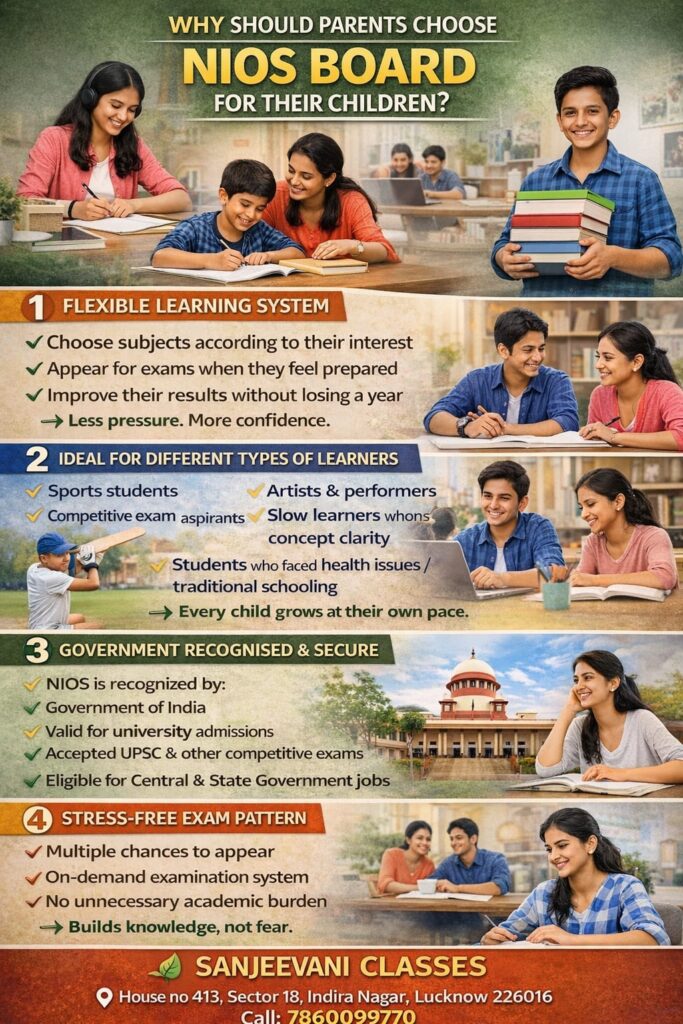
WHY SHOULD A PARENT CHOOSE NIOS BOARD
A Teacher’s Suggestion to Parents
- Every child is unique.
- And one education system cannot fit all children.
 Flexible Learning System
- NIOS gives children breathing space.
- Students can choose subjects according to their interests.
- They can appear for exams when they feel prepared.
- They can improve results without losing an academic year.
 Ideal for Different Types of Learners
- Brilliant sports students
- Creative artists
- Competitive exam aspirants
- Slow learners who only needed concept clarity
- Children who struggled due to health or emotional challenges
 Government Recognized & Secure
NIOS is recognized by:
- Government of India Universities
- UPSC and other competitive exams
- State and Central Government jobs
- Your child’s academic and career future remains completely secure.
 Stress-Free Examination Pattern
- The examination system is designed to support learning, not create anxiety.
- Multiple chances to appear
- On-demand examination system
- No unnecessary academic burden
 Academic + Vocational Opportunities
- Develop practical skills
- Become independent
- Prepare for real-world careers
- Education should prepare a child for life — not just marks.
 Focus on Real Learning
- Understanding
- Concept clarity
- Self-learning
 My Honest Suggestion to Parents
- Choosing a board is not about status.
- It is about suitability.
- Not every child needs a race track.
- Some children need a path that understands their pace.
- If your child feels pressured, misunderstood, or restricted in traditional systems, NIOS may provide the flexibility and confidence they truly need.
- Protect the child’s mental peace.
- Build their confidence.
- Secure their future.
NEW EDUCATION POLICY 2020
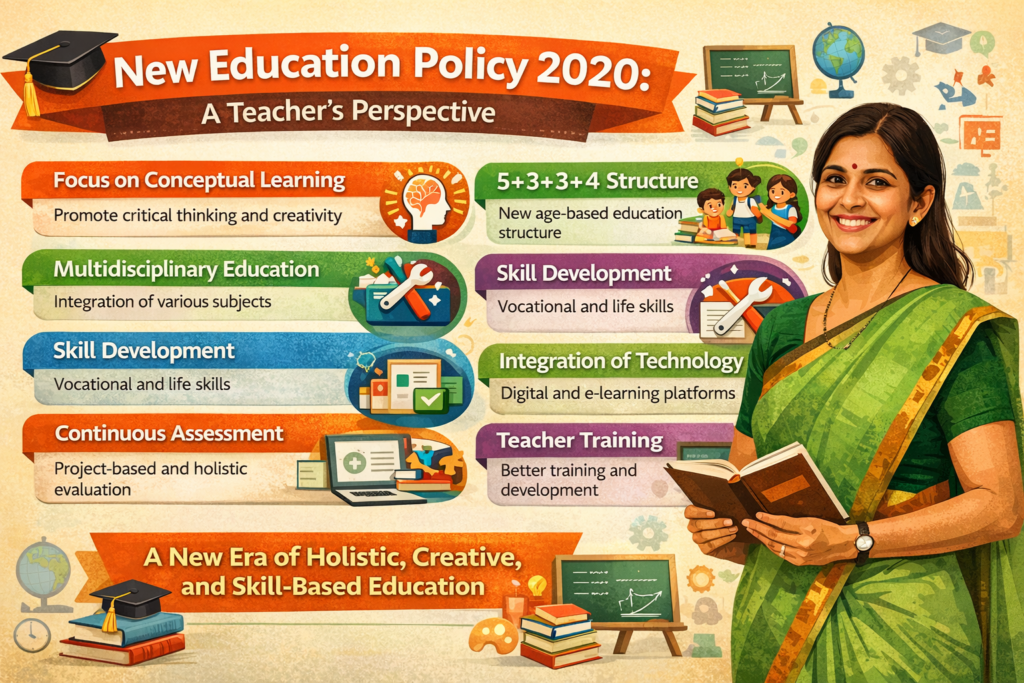
New Education Policy (NEP 2020): A Teacher’s Perspective
Introduction
Education plays a crucial role in shaping the intellectual, social, and economic progress of a nation. Teachers are the key agents who translate educational policies into meaningful learning experiences for students. The New Education Policy (NEP) 2020, introduced by the Government of India, aims to reform and modernize the education system by focusing on holistic development, flexibility, and skill-based learning.
From a teacher’s perspective, NEP 2020 represents both a significant opportunity and a challenge. It encourages teachers to adopt innovative teaching methods, promote critical thinking, and move beyond traditional rote learning practices.
Shift from Rote Learning to Conceptual Understanding
One of the most important objectives of the New Education Policy is to move away from rote memorization and encourage conceptual understanding. For many years, students were often evaluated primarily on their ability to recall information during examinations. This approach limited creativity and critical thinking.
NEP 2020 encourages teachers to focus on experiential learning, problem-solving, and analytical thinking. Teachers are expected to design learning activities that allow students to understand concepts deeply rather than simply memorize facts. This shift enables teachers to create more interactive classrooms where curiosity and inquiry become central to learning.
The New 5+3+3+4 Educational Structure
The policy replaces the traditional 10+2 structure with a 5+3+3+4 system, which aligns education with the developmental stages of children.
The first stage, known as the Foundational Stage, includes early childhood education and emphasizes play-based and activity-based learning. The Preparatory Stage focuses on building basic literacy and numeracy skills through interactive methods. The Middle Stage introduces more subject-oriented learning, while the Secondary Stage allows students to explore subjects in greater depth with increased flexibility.
From a teacher’s perspective, this structure requires teaching strategies that are appropriate for different age groups and learning capacities. Teachers must adopt methods that nurture creativity, curiosity, and independent thinking.
Multidisciplinary and Flexible Learning
Another significant feature of NEP 2020 is the removal of rigid boundaries between academic streams such as science, commerce, and arts. Students are encouraged to study subjects across disciplines according to their interests and abilities.
This approach requires teachers to promote multidisciplinary learning, where connections between different subjects are highlighted. For example, a science lesson may incorporate elements of mathematics, environmental awareness, and ethical considerations. Teachers thus become facilitators who guide students in exploring knowledge from multiple perspectives.
Emphasis on Skill Development
The policy strongly emphasizes vocational education and skill development. Education is expected to prepare students not only for academic success but also for practical life and professional careers.
Teachers play a vital role in helping students develop skills such as communication, collaboration, creativity, and digital literacy. By integrating practical activities and real-world applications into classroom learning, teachers can ensure that education becomes more meaningful and relevant.
Continuous and Holistic Assessment
NEP 2020 proposes reforms in the evaluation system by reducing the pressure of high-stakes examinations and promoting continuous and comprehensive assessment.
Teachers are encouraged to assess students through projects, assignments, presentations, and class participation rather than relying solely on written examinations. This approach allows teachers to evaluate the overall development of students, including their understanding, creativity, and problem-solving abilities.
Integration of Technology in Education
Technology is expected to play an important role in the modern education system. The New Education Policy promotes the use of digital learning platforms, online resources, and educational technology.
From a teacher’s perspective, this means that educators must become comfortable using digital tools and adapting to new forms of teaching such as blended and online learning. Technology can enhance classroom teaching by providing interactive resources and making learning more engaging for students.
Teacher Training and Professional Development
The success of any educational reform largely depends on the competence and motivation of teachers. Recognizing this fact, NEP 2020 emphasizes the importance of high-quality teacher education and continuous professional development.
Teachers will be encouraged to participate in training programs that enhance their pedagogical skills, subject knowledge, and technological competence. Such initiatives aim to strengthen the teaching profession and empower teachers as leaders in the education system.
Challenges in Implementation
While the New Education Policy offers many advantages, its implementation may also present certain challenges. Teachers may need to adapt to new teaching methodologies, incorporate technology effectively, and manage multidisciplinary learning environments.
Proper training, institutional support, and adequate resources will be essential to ensure that teachers can successfully implement these reforms.
Conclusion
The New Education Policy 2020 represents a transformative step toward building a more inclusive, flexible, and student-centered education system in India. From a teacher’s perspective, the policy offers an opportunity to redefine the role of educators from mere transmitters of information to mentors who nurture curiosity, creativity, and critical thinking.
If implemented effectively, NEP 2020 has the potential to empower teachers and prepare students to become responsible, skilled, and innovative citizens capable of contributing to the progress of society.
21st CENTURY TEACHING SKILLS
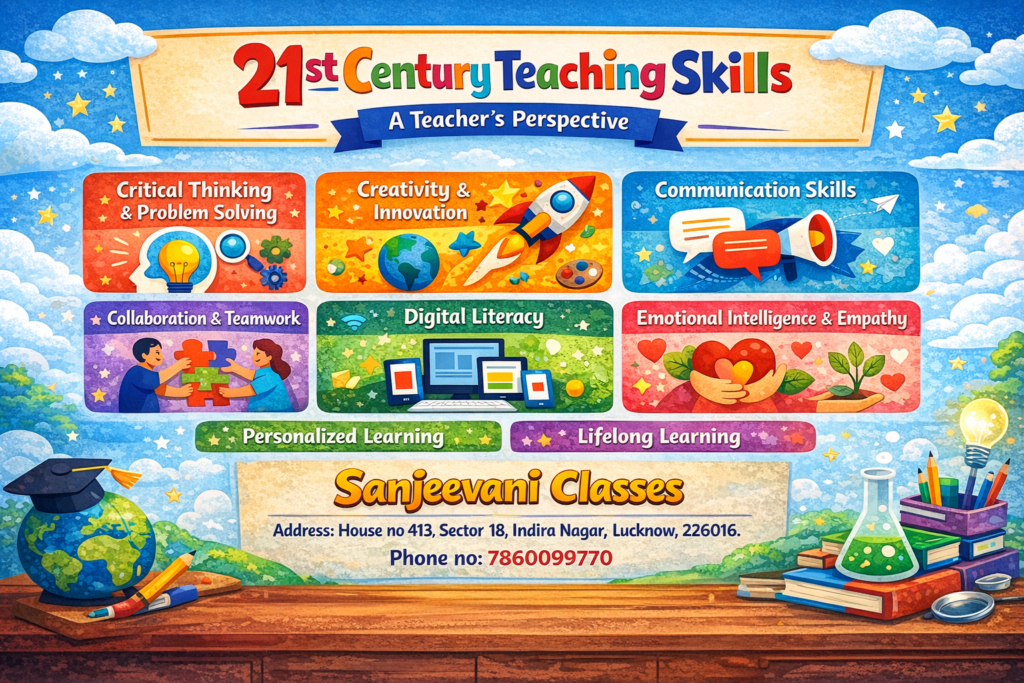
21st Century Teaching Skills: A Teacher’s Perspective
The 21st century has brought a remarkable transformation in the field of education. In earlier times, teaching was mostly limited to delivering information from textbooks, and students were expected to memorize facts. However, in today’s world, information is available everywhere—through the internet, digital libraries, and various technological platforms. Therefore, the role of a teacher has changed significantly. From a teacher’s perspective, the responsibility is no longer only to teach subjects, but also to develop skills, values, and competencies that prepare students for real-life challenges.
Changing Role of the Teacher
In the 21st century, a teacher is not merely a lecturer but a facilitator, mentor, guide, and motivator. Instead of simply transferring knowledge, the teacher creates an environment where students actively participate in learning. A teacher now encourages curiosity, exploration, and independent thinking. The classroom is no longer a place where students only listen; it is a place where they discuss, question, explore, and create knowledge together.
Critical Thinking and Problem-Solving
One of the most important skills in modern education is critical thinking. Students must learn how to analyze information, evaluate ideas, and solve problems logically. Teachers should design activities that encourage students to think deeply rather than simply memorizing answers. For example, open-ended questions, case studies, real-life situations, and project-based learning help students develop analytical thinking.
Problem-solving is closely connected to critical thinking. In real life, students will face situations where solutions are not directly available in textbooks. Teachers must therefore train students to identify problems, explore possible solutions, and make informed decisions.
Creativity and Innovation
Another essential aspect of 21st-century teaching is creativity. The modern world values innovative ideas and new ways of thinking. Teachers should encourage students to express their thoughts through creative activities such as presentations, storytelling, art, design, research projects, and innovative experiments.
When students are allowed to think creatively, learning becomes more meaningful and enjoyable. Creativity also helps students connect academic knowledge with real-life applications.
Communication Skills
Effective communication is an essential life skill in the modern era. Students must learn how to express their ideas clearly, confidently, and respectfully. Teachers play a crucial role in developing these abilities.
Classroom discussions, debates, presentations, and group activities help students improve both verbal and written communication skills. Teachers must create an atmosphere where students feel safe to share their thoughts without fear of criticism.
Collaboration and Teamwork
The 21st century emphasizes teamwork and collaboration. Many professional environments require people to work together with individuals from different backgrounds and cultures. Therefore, teachers must encourage collaborative learning through group projects, peer discussions, and cooperative tasks.
Through teamwork, students learn important values such as respect, patience, responsibility, and leadership. They also learn how to listen to others’ opinions and contribute their own ideas effectively.
Digital Literacy and Technology Integration
Technology has become an integral part of modern education. Teachers must be comfortable using digital tools such as smart boards, online learning platforms, multimedia presentations, educational applications, and virtual resources.
Digital literacy does not mean only knowing how to use devices; it also includes understanding how to use technology responsibly and effectively. Teachers must guide students in using the internet for research, creativity, and learning while also teaching them about digital safety and ethical behavior online.
Personalized and Student-Centered Learning
Every student learns differently. Some students understand better through visuals, some through discussions, and others through practical activities. A 21st-century teacher recognizes these differences and adopts student-centered teaching methods.
Instead of following a rigid teaching style, the teacher adapts strategies that suit the needs of diverse learners. Personalized learning ensures that every student receives the opportunity to grow according to their abilities.
Emotional Intelligence and Empathy
Education is not only about intellectual development but also about emotional growth. Students today face many pressures, including academic competition, social challenges, and personal struggles. A teacher must therefore show empathy and emotional understanding.
A supportive teacher can motivate students, build their confidence, and create a positive learning environment. Emotional intelligence helps teachers understand students’ feelings, encourage them during difficult times, and celebrate their achievements.
Lifelong Learning and Adaptability
In the rapidly changing world, learning never stops. Teachers themselves must remain lifelong learners. They need to update their knowledge, learn new teaching methods, and stay informed about technological and educational advancements.
A teacher who continues to learn becomes a powerful role model for students. When students see their teacher learning and evolving, they also develop a habit of continuous learning.
Values and Character Development
While skills and knowledge are important, education must also focus on values and character building. Teachers should help students develop honesty, responsibility, discipline, respect for others, and compassion.
A true teacher prepares students not only for exams but for life. Education should shape students into responsible citizens who contribute positively to society.
Conclusion
From a teacher’s perspective, 21st-century teaching is about creating a balanced combination of knowledge, skills, technology, creativity, and human values. The teacher becomes a guide who inspires curiosity, encourages independent thinking, and nurtures the overall personality of students.
When teachers adopt these modern teaching skills, the classroom becomes a dynamic space where students are not only learning lessons but also preparing themselves to face the complexities of the modern world with confidence and wisdom.
Teachers Are Meant to Be the Architects of the Future
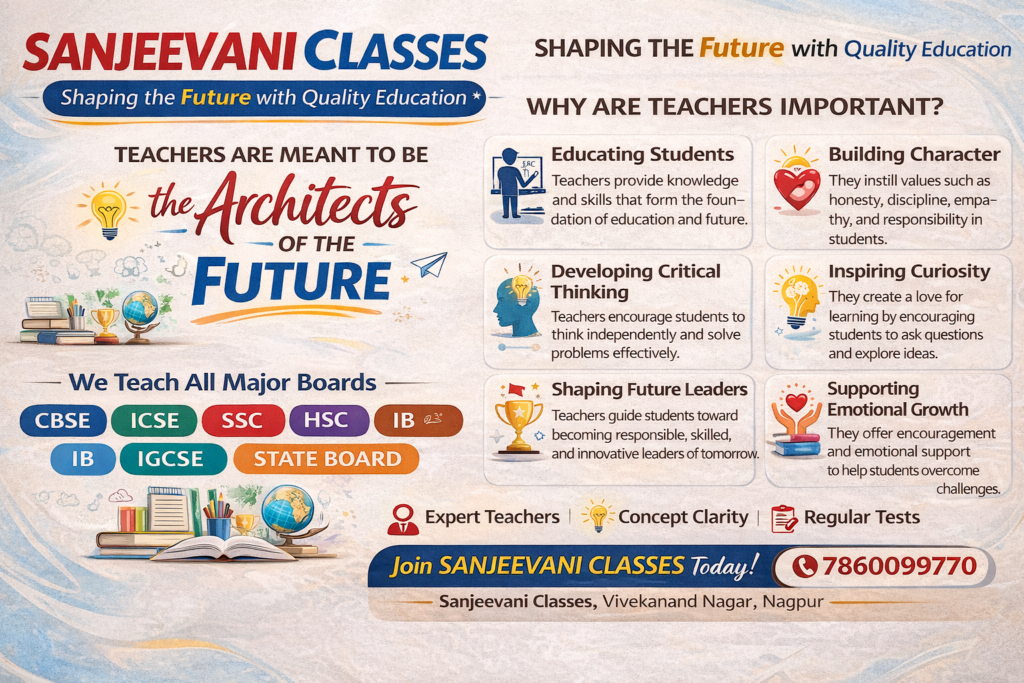
The Importance of Teachers in Society and the Role of Teachers in Education
Introduction
Teachers play one of the most important roles in shaping the future of society. The importance of teachers in education goes far beyond classroom instruction. Teachers guide students, inspire curiosity, build character, and prepare young minds to face the challenges of the world.
From ancient civilizations to modern digital societies, teachers have been the foundation of knowledge and progress. Every profession in the world, including doctors, engineers, scientists, artists, and leaders, begins with the guidance of teachers.
The role of teachers in society is therefore not limited to academic instruction. Teachers influence how students think, learn, behave, and contribute to their communities. They are mentors, motivators, and nation builders who shape the intellectual and moral development of future generations.
Understanding why teachers are important helps us appreciate their contribution to education systems and society as a whole.
What Is the Role of Teachers in Society
The role of teachers in society is fundamental to human development. Teachers are responsible for transferring knowledge, encouraging curiosity, and helping students develop critical thinking skills.
However, teaching is not only about delivering information. Teachers help students understand ideas, develop problem solving abilities, and apply knowledge in real life situations.
Teachers create learning environments where students feel safe to ask questions and explore new concepts. This environment allows children to develop confidence and intellectual independence.
Some key responsibilities of teachers include:
- Teaching academic subjects
- Encouraging creativity and curiosity
- Developing critical thinking skills
- Helping students build confidence
- Guiding students morally and socially
Because of these responsibilities, teachers are considered one of the most influential forces in shaping society.
Why Teachers Are Important in Education
The importance of teachers in education cannot be overstated. Teachers help students build the foundation of knowledge that supports lifelong learning.
Students do not simply need information. They need guidance on how to understand, analyze, and apply that information.
Teachers help students learn
- How to think critically
- How to solve problems
- How to communicate ideas
- How to work collaboratively
- How to develop discipline and responsibility
Education systems depend heavily on teachers because they transform information into meaningful learning experiences.
Without teachers, students would struggle to navigate complex subjects and develop intellectual skills.
Teachers as Nation Builders
Teachers are often described as nation builders because they influence the future of society through education.
Every professional in the world was once a student guided by teachers. Doctors who save lives, engineers who build infrastructure, and scientists who create innovations all began their journeys in classrooms.
Teachers shape the minds that later transform the world.
For example
- A teacher may inspire a student to pursue scientific research.
- A teacher may encourage a student to become a responsible leader.
- A teacher may help a struggling student discover hidden potential.
- These transformations highlight the enormous impact teachers have on society.
When teachers educate students, they indirectly contribute to economic growth, social stability, and national development.
Teachers Inspire Curiosity and Creativity
Curiosity is the foundation of learning and innovation. Teachers play a vital role in encouraging students to ask questions and explore ideas.
A great teacher does not simply provide answers. Instead, they guide students toward discovering answers themselves.
This approach helps students develop curiosity, creativity, and independent thinking.
For example, when students are encouraged to ask questions such as
- Why does the world work this way
- How can we solve problems differently
- What can we learn from history
they develop deeper understanding and intellectual confidence.
Creativity in fields such as science, technology, art, and literature often begins with curiosity nurtured by teachers.
Teachers Shape Character and Values
Education is not only about academic success. It also involves developing character and moral values.
Teachers influence students during important stages of personal development. Through their actions and guidance, teachers help students learn essential values such as
- Honesty
- Respect
- Discipline
- Responsibility
- Empathy
- Perseverance
Students observe how teachers behave and often adopt similar attitudes.
When teachers demonstrate fairness and integrity, students learn the importance of ethical behavior.
This character development helps create responsible citizens who contribute positively to society.
Teachers Support Emotional Development
Teachers often provide emotional support to students who face challenges in their lives.
Many students struggle with
- Academic pressure
- Lack of confidence
- Social difficulties
- Family problems
Teachers who recognize these challenges can offer encouragement and guidance.
Even a small gesture such as praising effort or acknowledging improvement can significantly boost a student’s confidence.
Many successful individuals credit teachers who believed in them during difficult times.
Teachers therefore influence not only academic achievement but also emotional well being.
Teachers in the Modern Digital Education System
The modern education system has changed significantly due to technological advancements.
Digital platforms, online learning tools, and educational software have transformed how information is shared.
However, the role of teachers remains essential.
Technology can provide information, but teachers provide understanding, context, and guidance.
Teachers help students develop digital literacy, critical thinking, and responsible use of information.
Modern classrooms often include
- Interactive learning
- Project based learning
- Collaborative activities
- Technology assisted instruction
Teachers guide students through these experiences and ensure that learning remains meaningful and engaging.
Challenges Faced by Teachers in Modern Education
Despite their importance, teachers often face many challenges in modern education systems.
Some common challenges include:
- Large classroom sizes
- Limited educational resources
- Administrative responsibilities
- Pressure from examination systems
- Rapid changes in technology and teaching methods
In many regions, teachers also face issues related to salary and professional recognition.
These challenges can affect motivation and job satisfaction.
However, many teachers continue their work with dedication because they believe in the transformative power of education.
Their commitment highlights the deep sense of responsibility teachers feel toward their students.
Why Society Must Respect Teachers
Respect for teachers is essential for building strong education systems.
When teachers are valued and supported, they can focus on improving the quality of education.
Society should recognize that teachers are responsible for shaping future generations.
Supporting teachers involves
- Providing fair compensation
- Offering professional development opportunities
- Creating supportive learning environments
- Recognizing their contributions to society
When teachers feel respected, they are more motivated to inspire students and innovate in teaching methods.
The Partnership Between Teachers and Parents
Education is most effective when teachers and parents work together. Parents play an important role in reinforcing the lessons and values taught in schools. Open communication between parents and teachers helps identify students strengths and areas that need improvement.
When parents support teachers and respect their guidance, students develop positive attitudes toward education.
A strong partnership between schools and families creates a supportive environment where students can succeed academically and emotionally.
The Future of Teaching and Education
The future of education will continue to evolve with technological innovation and global connectivity.
However, the fundamental role of teachers will remain the same.
Teachers will continue to guide students in understanding complex ideas, developing character, and preparing for real world challenges.
Future classrooms may include:
- Artificial intelligence assisted learning
- Virtual classrooms
- Personalized learning systems
- Global collaboration among students
Even with these advancements, teachers will remain essential because education ultimately depends on human guidance, mentorship, and inspiration.
Conclusion
Teachers are meant to be the architects of the future. Their influence extends far beyond classroom instruction.
Teachers shape knowledge, character, confidence, and curiosity in students.
Every achievement in society—from scientific breakthroughs to social progress—has been influenced by teachers who guided the individuals responsible for those achievements.
Recognizing the importance of teachers in society is essential for building strong education systems and progressive communities.
When teachers are respected, supported, and empowered, they can continue their mission of shaping the next generation of thinkers, innovators, and leaders.
Ultimately, the future of humanity depends on education, and the strength of education depends on teachers.
Frequently Asked Questions:
Why are teachers important in society?
Teachers are important because they educate future generations, develop critical thinking skills, and help build responsible citizens who contribute to society.
What is the role of teachers in education?
Teachers guide learning, explain complex concepts, encourage curiosity, and help students develop knowledge, confidence, and problem solving skills.
How do teachers shape the future?
Teachers shape the future by influencing students intellectually and morally, helping them develop the skills necessary to become leaders, innovators, and responsible citizens.
Why should teachers be respected?
Teachers should be respected because they dedicate their lives to educating and mentoring students who will shape the future of society.